

Wilkista Akinyi
  • Home
  • About me
  • Inspiration
  • Careers
  • Energy & Sustainability
  • investments
  • Contact Me
Category:

inspiration

inspirationpositivity

Positivity: Should there be limits?

by wakinyi August 2, 2025
written by wakinyi

Happy new month! I don’t know why. But August feels like it’s going to be a month of truly beautiful moments – and positive chemicals. Maybe it is because the first piece of inspiration I bumped on the 1st of August was this psychologist summary note on how to produce positive (happy) chemicals.
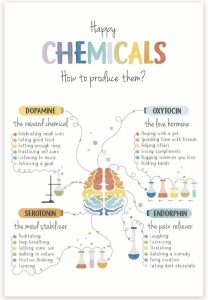
Happy Chemicals

Source: LinkedIn User

Is it bad to criticize?

Criticism is healthy as things sometimes get better as a result. However, whiles some people will take it positively, some prefer don’t. Regardless, I think that positive thinking should not be reduced to saying all the nice things for the sake of people pleasing. But yes, it is good to churn out positivity – it feels lightening when you take a breather and paraphrase that nasty comment or simply offer complements to other people to appreciate their efforts. It has been 2 weeks now of working very hard to be a positive persona. Before I say something, I have literally whispered to myself to stay positive. I have succeeded on some days and offered uplifting notes to those around me. But on others like this weekend where I decided to offer the benefit of doubt and see a random mechanic, things went very South and let’s just say I totally regretted why I did not go by my usual instincts of reaching out to my regular service provider first. Sometimes applying your instincts can save situations!

I would like to keep this post quite short and end by saying:

Yes, it is possible to become positivite or work in progress. And while living positively makes us feel better and the society a better place – it should not mean a full shutdown of our filters to letting everything sail. Saying the things people wish to hear in the way they wish to hear it often feels like positivity – but it may not be. Have deferring viewpoints is okay. What we must learn is how best to say hard or not so pleasant things with respect of the recipient’s human-side. Before you say something to anyone this month, ask yourself how would I feel if the same thing was said to me? Rework until it is palatable to you as the recipient – language, tone etc without losing original messaging – good or bad.

Until the next post, happy new month mastering simple acts of positivity while not letting it change who you are!

August 2, 2025 0 comment
0 FacebookTwitterPinterestEmail
inspirationpositivity

Why do I do it?

by wakinyi July 19, 2025
written by wakinyi

A couple of times, some people have asked why I blog. It seems like a rather obvious question, right? Because the answer would probably lie somewhere between it’s a hobby, I enjoy doing it, or writing makes me happy etc. A bold friend once asked me if I would consider ‘monetizing my blog’ – he even offered to help me do it as he happened to be a web techie and one of his strengths was knowing just about the right thing to publish and turn your content development hobby into a cash cow. We know how the drill goes. That aside…

Yesterday evening, as I reflected on the things I do, why I do them and why I do them the way I do them, it took me back to the basics of why my blog was birthed in 2012 – prior to which I had toyed with the idea since 2010. At the time I kept writing and deleting pieces. At one point (2011) I even gathered the courage to send out an article for publication by a major newspaper outlet which never saw the light of day – they didn’t even send a regret to affirm that the article was received but was not good enough. Three years later and interestingly, this same article made it to that exact same newspaper, garnering double pages in publish, difference being this time round the story, my story, was documented by an experienced journalist and it had more buzzers and life to it. Stardom hit home for a second there! It should be noted that at the time I had already blogged about it, but it didn’t hit waves as the version that would be released on the paper years later. Why am I sharing this? It is to say that:

An idea or story whose time has come will be told by yourself or somebody else, so don’t give up on it.

Reading through my first blogpost in 2012 where I spoke about my journey into blogging, I realize that I said many positive things and was set for an upward trajectory in as far as stepwise or piecemeal progress is concerned. I think I wrote another post on stepwise endeavours round about that time, will try trace it and drop the hyperlink in case anyone’s interested. Over a decade later, ask me again why I blog. The answer might slightly differ from the original drive those years back – but the fundamentals remain the same. In the present, one of the reasons I write – albeit long (see who changed after accusing her then boss of being a verbose writer…uh!). I try to be concise – considering the era we live in and fact that people just do not have the energy for long narratives. This reminds me of an incident last year where a communication expert tried to convince a production team I was working with to shorten a 15-minute documentary we’d worked hard on for months into an under 4 minutes runtime as otherwise no one would watch it. I put my feet down and said the docu was intended for a specific audience – it was not everyone’s cup of tea hence we would not go back to the storyboard and craft something shorter. If you must know, shortening would have essentially killed some characters who were important to the storyline – I was not about to let that happen. In today’s world, quality books get lesser readership as attention is now re-directed to social media content and the likes. So yes, general consumers have every right to demand shortness – I also often advise on succinctness especially for social media related content, even though I struggle with it. Sorry, it’s the times we live in, don’t curse humanity for this evolution. It is what it is!

Okay, let me finally answer the question on why I blog (today) and stop there before attention switches.

I do it because it is my happy place – believe it or not – writing has been a source of therapy for me. Yes, I also do (self) therapy, no one’s perfect!

Increasingly I find writing, just as I do instrument playing to be my source of psychological wellness. Just like strumming – which I will hopefully write about someday – writing about my opportunities and challenges gives me the space to be myself and share opinions in a way I feel comfortable doing it. It also allows me to see the world from a different perspective – one where I am the ‘student of life’ eagerly waiting to learn and share my lessons with others occasionally.

Until the next post, happy times figuring out why you do what you do!

July 19, 2025 2 comments
2 FacebookTwitterPinterestEmail
Energy & Sustainabilityinspiration

World Environment Day 2025

by wakinyi June 6, 2025
written by wakinyi

Towards the end of last year, I decided to take on a new challenge into 2025 – organic farming based on own homemade manure. I was curious to experience first-hand what it’s like to compost kitchen waste from scratch blending knowledge acquired through online resources while fusing in own ideas as well based on locally available materials.

It has now been 6-months since this new challenge began. And I wish to share my journey while answering a few questions which could hopefully inspire somebody else in one way or the other – because both good and bad learnings are an important part of life. To start off, one of my biggest take-aways through this experiential journey is that things don’t always go as per what you have read or learnt in theory. So be prepared to fail and rise back up or change course when practical kicks in.

I did not visually document my journey as such, so this post will attempt to use the power of memory expressed in words to share the findings. However, in case you wish to read more or watch educative videos on how to produce organic manure or liquid fertilizer at home, rest assured that there are plenty of videos on Youtube and articles online regarding the subject. In short, knowledge is readily available for consumption!

  1. Setting up of the composting unit and required materials

To set up the unit, you require two buckets (inner chamber – a bucket with perforations at the bottom and outer chamber – which is essentially the liquid fertilizer collector); feedstock, water; and depending on the type of decomposing method you prefer  – aerobic or anaerobic, you may need a catalyst (e.g. natural yogurt or molasses for the bacteria or if you like enzymes); the top bucket cover if you opt to go for anaerobic fermentation which means no air should make into your composter.

In my case I used an old 20-litre bucket – it was broken and therefore already had a hole at the bottom. I inserted this into a non-perforated a slightly smaller bucket which served as the liquid fertilizer collecting tank. If you prefer, you can have both buckets pre-crafted or buy a ready-made unit from a local agro-supplies dealer. But it is easier to do it yourself to ensure there is as much re-use of materials readily available in your home, including broken things that you would otherwise dispose. For the feedstock I mostly used organic (uncooked) fruit/vegetable/food peelings/leftovers (e.g. melons, citrus fruits – be careful with portions of this, kales, traditional vegetables, mangoes, bananas, fallen tree leaves, eggshells). I also added a small pinch of old carton pieces (to replace saw dust) although not too sure if this helped the process as I was concerned it is already chemicalized during the production process. It is advisable that everything going into your pit bucket is cut into small pieces for faster composting and avoid in-organic matter, including cooked food since these slow down the process. As well, try to avoid infected organic matter. Dry leaves off plants are also good to add to your compost mixture.

  1. Strike a balance in the mix of organic waste added to the composting pit

There is plenty of information available online regarding the types of feedstocks to use in your kitchen composting unit. One of the things I came to learn is that you must strike a balance between acidic vs alkaline residue or minerals concentration within the composter so that you don’t have too much of a single element at any point in time. I never used a specific formula to decide the ratios of what goes into the pit – it was mostly based on the kitchen waste that we had for the period I was piling the composting bucket until it was finally full. However, I would later learn the hard way that you have to be careful with the combination as earlier because it affects the pH level or generally the mineral proportions – as the saying goes, too much of anything is dangerous – even for plants. For example, 3 weeks into the process, I decided to spray our vertical vegetable garden using the already piled liquid concentrate in the collecting bucket. A few days later, I noticed the plants’ leaves which were originally green and healthy had started yellowing. Something was off! It was either the plants were soaked in water (unlikely), or there was a high content of a nutrient, and this was doing more harm than good to the plants. In this case, turns out the nitrogen content was too high.  I had purposed to do the foliar spraying every fortnight or so – but stopped immediately to monitor the plants. Let’s just say the damage control effort didn’t quite salvage the situation, but the yellowing stopped as new leaves sprouted. 6 months later – I look back and ask myself how I would do things differently – for example, spraying just a small portion of the kitchen garden or running the trial on a few pot plants first and monitor the results for a few days to a week before applying the whole concentrate everywhere. This goes back to the basics of bioscience – you don’t roll out a new product on bios before you have fully run lab tests/trials and understood the side effects and how best to remedy them.

  1. Frequency of adding waste into the compost bucket and sunlight exposure

In the first month, I added kitchen waste at least twice a week and each time would also add a few parts of water. In my case, I had no formular for the water ratio, I mostly used observation to check that the compost was adequately moistened and not too soaked. Once the inner bucket was full and could take no more food waste, I stopped the additions.

If you are fermenting aerobically, it is important to ensure there is leeway for airflow for the bacteria. In my case, I opted for anaerobic fermentation, so everything was airtight. However, I would open it occasionally over the 6 weeks period to mix up the feedstock. I set up the composter in a place with access to sunlight/heat but not extreme. The heat helps to speed up the composting process. So, if you live in a rather cold or say winter region – the process will take longer.  It is also important to monitor the temperature level in the fermenting bucket. If you happen to visit large composting farms; you will notice that some use thermometers. In my case, this was not a major concern as the set-up location was not too exposed to heat and generally had cool air flow (windy). The temperature was just about right.

  1. Duration to get the liquid fertilizer ready. How long should one wait?

The longer the fermentation process, the more mature and richer in nutritive content the fertilizer ripens for boosting your plants. Some online literature indicates between 12 days to 6 weeks, several months and even years for the ancient farmers who have traditionally applied organic farming practises especially in the Asian countries. In my case, I harvested the liquid in the initial weeks and that didn’t go well as earlier shared. I therefore decided to be patient and wait a longer period and recently harvested the 6-month fermented liquid. I must say that it does look like the real thing and the smell is also relatively more manageable. It is however not odourless as some online resources suggest. I poured it on plants last weekend and so far, there is no yellowing which I take to mean it is blending well with the plants. Or it’s too early to tell. There are no instant results in farming, I think.

  1. When does the compost get ready for use?

In this experiment, I had set out mainly to harvest the liquid fertilizer because I am a small space farmer who does either vertical or pot planting. Hence readily absorbable foliar fertilizers or concentrates poured directly into the soil are my priority. However, as is expected – the soil nutrients need to be restored hence the organic manure is also important to have. 6-months in, the compost is not yet fully ready, but most of the food content has been broken down. I have now transferred it from the bucket to an old tyre where it will hopefully complete the composting process and then dry in readiness for mixing with the soils for the next planting season. I think full composting can take as long as long can be – depending also on if you had organic catalyzers or not – and you have mastered the process. It requires true patience if you ask me.

  1. Some of my lessons learnt/key take-aways?
  • Home preparation of organic compost or liquid fertilizer has been a craft dating back to ancient days. In Japan for example, there has been a long tradition to use liquid organic fertilizer and sometimes they decompose it for several months to years (Bokashi fertilizer).
  • Liquid fertilizer can readily be sprayed on plant leaves or poured into the soil. However, you may need to dilute it with equal or higher parts of water in case minerals concentration is too high for certain plants in your kitchen garden or pots (especially the young ones). The fertilizer ideally works for any plants – including succulents.
  • For the compost manure, full decomposition can take a while. In my case it has been 6-months and there are still a few remnants of plants still visible which means the process isn’t complete yet as it all needs to turn into ‘soil’. Once the process is complete, the next step is to allow the compost to fully dry before you can add it to your garden soil.
  • There will be bad odour emanating from your pit, which is a rather negative outcome especially if you live in a neighbourhood (air pollution). If you, or your neighbours get easily disturbed by strong awful smell, I would be quick to say don’t try this at home. In my readings, I gathered that there are tested and proven ways to minimize the bad odour effect during the composting process – I probably didn’t take enough time to research and learn the whole process well. Something I would probably aim to improve on in future.
  • Avoid adding ‘infected’ plants into your compost pit because some of the pathogens might later on affect your healthy plants should the diseases be propagated within the organic fertilizer or manure.
  • Is it organic if you are using plastic buckets in the composting process? Well, this is a question I am also struggling with. Hopefully we find an answer sooner or later. All in all, I would say everything has pros and cons.

  1. Ultimately, Would I do it again?

Easy answer is probably not because it was a bit of a struggle for me. I also feel the process has been rather long – which was a real taste of my patience. There were periods in between where my plants needed nutrients, but I was afraid to try the ‘half-baked’ liquid fertilizer because of the yellowing outcome at week 3. The odour was also a bit too much – going by the reactions anytime I opened the bucket to mix the feedstock. Again, it could be because I didn’t take enough time to learn the process and get it right – so there is a challenge there to try and get it right should I decide to go down that road again. I however enjoyed the experimental learning process. All in all, I would still wish to explore and understand small space organic farming further but will probably stick to buying already organic manure or liquid fertilizers from experienced biofertilizer farmers. Professionals exist for a reason, right?

Until the next post, happy experimental endeavours.

And in the spirit of World Environment Day 2025, let’s aim to reduce-re-use or recycle waste to make our planet healthier and better us and the future generations!

June 6, 2025 0 comment
0 FacebookTwitterPinterestEmail
familyfriendshipsinspiration

Nuggets of Wisdom – 2

by wakinyi April 29, 2025
written by wakinyi

Until recently, it had been a while since I spent ‘quality time’ with the special mother figures granted to me in my childhood years. If you have been reading my blog posts then you might be aware of what I am talking about. If you haven’t, worry not – the long story short is the universe was kind to bless me with the gift of a special friend of my biological mom’s and an auntie who have been there for me over the years – as advisors, parents and cheerleaders. These are probably the only two people I take a minute to mumble a short word of blessing over their lives every morning – because I sometimes get too lazy to ‘pray’. But when I remember that I am blessed to have two mothers who, by the way, are very prayerful people – the type who pray before meals, before bedtime, first thing in the morning or any other opportunity, the least I can do really is declare a blessing over their lives – nothing complicated. I like to think it is because of these ladies that I am always ready and set to face anything that the world throws at me, stand up tall and speak boldly without a blink of an eye.

It is often said that we should create time for the people we cherish, because once gone we cannot take it back.

But many are the times we trade off materialism to actual time spent with loved ones – I am a victim of the same so will take this bullet as well. Coincidentally as I was browsing my Linked-In feed earlier this morning, I came across a post by a CEO of a certain company who, together with the employees have established a culture of visiting each other’s parents back in the countryside. You can tell from the pictures that the parents for whom the most recent visitation had been done were overjoyed and no amount of money can buy that kind of happiness. Reading this post reminded me of the one time a group of friends and I decided to do an almost similar thing in 2023 and visited a friend’s parent in the countryside. The feeling was phenomenal. We haven’t done anything like that thereafter in part because friendships change with time which is a normal thing so don’t beat yourself too hard if your past friendships don’t seem to be working anymore no matter how much effort you plough in. I think I have also written a few things about the subject of friendship evolution in a past post, can’t remember which post it was unfortunately. I do occasionally come across healthy friendship relations in work circles or newspaper articles full of inspiration on how to invest in working networks and keep the flame burning throughout your lifetime.

Time with loved ones is precious and priceless. It brings a certain level of satisfaction – unprecedented. You indulge in nuggets of wisdom shared in a rather subtle way via regular conversations. For example, I remember one evening when we found ourselves talking about families who lived under very difficult situations in a nearby informal settlement, the struggles they went through daily such as no food to eat or a decent home to sleep. However, these families were happy to be alive and kicking through each day. In yet a different conversation we spoke about staying with one employer throughout one’s entire working lifetime because in our generation this would be difficult – but is something our old folks easily up managed until retirement. It is hard to achieve the kind of satisfaction or shall I say complacency to stay in the same place for decades. We are always looking for new challenges and opportunities, albeit elsewhere whether the present environment is conducive or not. So how exactly did they do it? I don’t have a specific answer to this question, but part of the advice received was on the importance of first identifying what your big picture or goal in life is. If your current work environment allows you to get there, then you adapt and live through it despite the obstacles.

But learning is not restricted to conversations, as we know, actions speak louder than words. There are times when learning points can be found through simple gestures e.g. grooming moments over light banters or catching up while preparing meals and learning a cooking tip that somehow skipped you while growing up. Finally, the quality of air we breathe while at the countryside is healing. And if you come from extremely hot areas, growing of plenty of trees to make your surroundings cooler and fresher is a cherry on top. Not to forget fruit trees.

Until the next post, happy moments creating quality time with your parents or loved ones.

April 29, 2025 0 comment
0 FacebookTwitterPinterestEmail
inspiration

Lessons from Northern Kenya

by wakinyi April 12, 2025
written by wakinyi

A few weeks back, I visited Dagahaley, Ifo and Hagadera located in Kenya’s Dadaab and Fafi regions of Garissa County. Until then, these are places that I mostly knew about through secondary material. Because a lot has been said and written – some good, some bad.  If there is anything I have learnt over the years, it is that firsthand information is the best form of enlightenment.  Here’s a summary of my enlightening encounters.

Building an oasis in a desert: I had the opportunity to visit a tree growing centre and, in the vicinity, you could notice the green and cool micro-climate effect. Here we met a community that was determined to change the narrative of the surroundings. To turn it from a hot, dry and arid region to one that could fill the food baskets and reduce the grudgingly hot heat from the sun.

Shariah compliant banking is transforming local economies. I should be a bit familiar with Shariah banking having previously worked with a Somali owned enterprise. But sometimes these things don’t register in the mind until you find yourself in the middle of it all. Talk of a situation where unlocking access to financing is part of what must be done. And then you come across the only players preferred players because they have taken time to understand the local culture and how its banking needs works. For the longest period, I struggled to understand Islamic banking and how financial institutions make money in such cases if there is no interest charged on loans disbursed. Well, after this trip —I think I have a better understanding, maybe not the details of it but what is most critical to know for my situation.

A culture built in trust and social cohesion:  I was curious to learn how the local communities get along, pull together capital resources and invest. If anything, Somalis are now some of the biggest businessmen in the country, following the footsteps formerly renowned only for Indians and the Kikuyu tribe. And well, if you thought this business vigour is only in the major towns across the country, you got it wrong. Despite the logistical hurdles and harsh environment that characterises the Northern region, you will find several small businesses owned and operated by Somalis that are flourishing given the context. This speaks to their resilience and determination to beat all odds despite the obstacles. Traditionally, the community is majorly livestock keepers here in Kenya (I would come to learn, surprisingly, that the same tribe from across the border are farmers good at crop growing). We had the opportunity to visit one of the largest livestock markets and interestingly, part of the animals sold find way into the supply chains to meet consumption needs in the capital city of Nairobi. Unlike other pastoralist communities where cases of cattle rustling for example is one of the major challenges faced, this one seemed to be a different narrative. One where there is mutual co-existence, cemented by strong cultural believes built in trust and togetherness to achieve a bigger goal of prosperity.

A preference for cars for local movement rather than motorbikes as typical of rural to peri-urban towns. This one caught me a little out of surprise. Not that I was out to find what I typically see in rural areas – a preference for two-wheelers for mobility. This region was different – there was preference for a certain type of car model (very affordable and of low engine capacity) for movement rather than motorbikes. There were several young men driving these cars – which implies this is a vibrant employment industry for the youth in these locations. For me, this also suggests that in life, you can decide and set the minimum standards of what convenience means for you and choose it, regardless of where you are.

Respect for religious principles: My visit coincided with the holy season of Ramadhan and this being a largely Islamic community – the season holiness rented the air. But that is not what stood out, because in the past I have interacted closely with a few Muslims – in high school year one my roommate was of Muslim faith, and I couldn’t help but notice her reverence. Never skipping a prayer moment. And this was no different on this trip, the fact that we were on the move did not stop faithful from doing what they must – take a moment to pray and keep the faith throughout the fasting season. I think fasting is one of those things that are easier said than done. To come across a community where everyone seems to do the right thing in as far as religious doctrines are concerned – and doing so without being reminded (both the young and old alike) is a depiction of what ingrained self-discipline should looks like.

Security threats should not hold us back from long term development – I think this is my final takeaway. For a region that barely gets adequate investments because people are too afraid it might not last, I would experience a people that have hope for a brighter future ahead, one where extremists (forget the tribal and faith stereotyping) will no longer set the precedence of how a region is perceived and served. I interacted with an elder man who was proud to do what he loves most – drive cars.  He was proud to live where in this community despite the odds and risks that come with it and all the negative news that often relays a highly porous and insecure region.  His only hope being that his future generations will find a more peaceful, harmonious, developed and non-neglected locale to call home. After all, East or West home is the best, right?

Until the next post, happy moments embracing different cultures and communities around us!

April 12, 2025 1 comment
0 FacebookTwitterPinterestEmail
  • 1
  • 2
  • 3
  • 4
  • 5
  • …
  • 11

Recent Posts

  • Reflections from World Cup 2026
  • World Environment Day 2026
  • Career Circles – 2
  • Career Circles – 1
  • Nuggets of Wisdom 3

Recent Comments

  • wakinyi on Why do I do it?
  • Andrew Adwera Ochieng on Why do I do it?
  • Finance on Lessons from Northern Kenya
  • ABCs of Money – 3 – Wilkista Akinyi on ABC of Money – 2
  • Norah Magero on The Gender Equity Debate

Newsletter

Subscribe my Newsletter for new blog posts, tips & new photos. Let's stay updated!

Categories

  • Careers (12)
  • Culture (7)
  • Energy & Sustainability (14)
  • family (3)
  • financial literacy (5)
  • friendships (8)
  • goals (4)
  • inspiration (55)
  • investments (10)
  • Leadership (5)
  • memories (12)
  • positivity (34)
  • social media (3)
  • tributes (6)
  • Uncategorized (7)

About me

banner
Welcome to Opportunities and Challenges: A haven ‘’For all those things that shape my life, I feel obliged to share them with somebody”. Because each of us faces opportunities or challenges every day, and sharing is caring.

Popular Posts

  • 1

    1st shot of the vaccine and what a day!

    September 19, 2021
  • 2

    The Cool Green Campaign Initiative

    August 6, 2022
  • 3

    World Environment Day 2021: Ecosystem Restoration

    June 5, 2021

Newsletter

Subscribe my Newsletter for new blog posts, tips & new photos. Let's stay updated!

  • Facebook
  • Twitter
  • Instagram
  • Linkedin

@2020 - All Right Reserved. Designed and Developed by Pentest


Back To Top
Wilkista Akinyi
  • Home
  • About me
  • Inspiration
  • Careers
  • Energy & Sustainability
  • investments
  • Contact Me