Wilkista Akinyi
  • Home
  • About me
  • Inspiration
  • Careers
  • Energy & Sustainability
  • investments
  • Contact Me
Category:

Energy & Sustainability

Energy & Sustainabilityinspirationmemories

Lessons across borders

by wakinyi March 29, 2024
written by wakinyi

This post has been inspired by a colleague – who suggested I should write something about a recent experience. You know yourself! Thanks for the inspiration.

Earlier this month, I travelled across the border. In my earlier adulting life —I have done a few bus travels from Nairobi to Kampala. However, most of this occurred at night so I barely grasped the beauty that is the better part of this ‘Pearl of Africa’ nation. I think our neighbours are lucky that a bigger chunk of their land is what you would consider fertile, if the scenery between Kampala and Northwestern city of Arua is anything to go by – this is where my recent trip took me – a nearly 9-hour road travel. It was conspicuous to note how ‘popular’ the jackfruit plant dots the terrain, when you barely get a glimpse of that in my home country. Or maybe I haven’t traversed Kenya enough to find out, at least not the visible presence along a highway. I also caught an amazing view of the Nile River, which is the longest river in Africa at 6,600km. The view was just a few kilometres after our drive through the serene Murchinson falls national park.  The park boasts of thousands of wildlife species. But what caught my attention is the extensive cover of the borassus palm trees. I am still curious to find out if it is exploited for commercial reasons considering the vegetation is naturally occurring in a park. 

Here are a few things I learnt during the Ugandan excursion that might be worth a read:

  1. Woodlot establishment culture. Prior to the trip, I had heard about woodlots but didn’t exactly know what it means. If you were clueless like me, it is basically the growing of trees and I dare say sustainable foresting for purposes of meeting everyday wood and charcoal needs. It is common knowledge that biomass is the primary source of energy in sub–Saharan African countries. Even as we talk about measures of afforestation, improved cookstove technologies and alternative cooking fuels to address energy needs and climate change wrath, we still have a long way to go. Hence, I think initiatives that strive to establish woodlots was a big take home, especially the teak tree species which is a rather drought resistant hardwood tree that does quite well in Northern Uganda. I have barely seen it in Kenya and thought it could be an interesting species to test in our dry regions.
  2. Volcanic rock stoves are a thing! In one of my discussions with a colleague, he mentioned something he had recently learnt – imagine using rocks as a source of heating fuel. That’s right! Although this is yet to gain momentum, largely due to the cost limitation. It is an alternative energy solution already in use in Uganda. I was curious to understand the lifespan of the rocks and was advised that they can be used for about 2 years before replacement. Imagine buying that and forgetting about refills or restock for another 2 years – as is typical of LPG and biofuels like charcoal and wood often used in our homes. How cool is that! I never got the chance to see for myself how the stove works, but it was an incredible lesson to reflect on. I hope to catch the stove in use someday. Or who knows, graduate to become a user.
  3. Innovation hubs at the heart of the community are the way to go in fostering user-centric solutions to prevalent challenges. We had the opportunity to visit the MIT-Kulika D-lab at the Rhino camp settlement in Arua. Although I did not get the opportunity to fully immerse in the centre’s innovations, my glance at the available tools and equipment, and projects under incubation or completed by the group of youths was enough to tell it all.
  4. Open door policy – does it work? An open-door policy is a leadership model that encourages accessibility. Uganda is one of the few countries that apply an open-door policy for inclusion of refugees and asylum seekers. But how easy is it in practise? For example, when it comes to matters national security, no country wants to keep her borders porous. An open-door policy can easily be faulted as a high security risk. So how exactly do our neighbours make it work? In my exchanges with various Ugandan policy makers and enforcement agencies, I learnt that it is indeed possible to apply it. However, this also comes with points of overlap and challenges in practise, particularly in administrative functions, resource access and statutory provisions. But like any progressive policy instrument, there are always challenges that must be grappled with.
  5. A story of resilience and hope for a better tomorrow. As is often said, everybody has a story to tell. And nobody can tell your story better than you. While it is hard to tell an emotionally difficult story, it is equally as hard sitting through such a story without break apart. I was particularly touched by the story of an enterprising carpenter who runs a small enterprise under a tree. He refers to it as ‘reju reju‘ which in English translates to resilience. Now a gradually aging man, he uses his skills to educate the next generation of carpenters and youths, with hope that he will one day set up a big training facility to offer a fully-fledged vocational training centre to his community. With the few resources available for him amidst the harsh challenges he faces on a daily basis, he defies odds to make ends meet. Due to the strenuous nature of transporting raw materials from the main trading centres, he is gradually developing a shoulder and back-ache – but that does not stop him from soldiering on. He is optimistic that one day the road accessibility will offer a better transport network – so that he doesn’t have to strain by using his small motorcycle to transport bulky materials. Over the years, I have found myself internally battling with questions such as, why does God allow some people to go through relatively more difficult seasons than others? Why can’t we all have the same rights, resources, tranquillity, health, wellbeing, you name it. Are we doing enough to make the world a better place for all of us? Will we ever solve the global stresses? Are we even on the right trajectory to solve it all?

I am always grateful to get opportunities to interact with people who are facing odds and thriving in extremely difficult environments. They inspire hope – a hope of a better tomorrow – one where everyone has the means and tools to elevate themselves. Whether we will ever reach that kind of a society is a question that only time can answer.  As we enjoy the Easter holiday – for those of us who mark it, let us remember to extend a ray of hope to those seeking refuge around us. It is the least we can do, considering that the greatest sacrifice was offered for our sake many centuries ago.


Until the next post, happy Easter holidays!


March 29, 2024 0 comment
0 FacebookTwitterPinterestEmail
Energy & Sustainability

The Cool Green Campaign Initiative

by wakinyi August 6, 2022
written by wakinyi

If I do not blog about this event, I will have done heavy injustice to the ‘Cool Green Campaign’. A noble cause for which my heart, skills and talent have been closely associated over the last 5 years. But what exactly is the Cool Green Campaign?

For starters, the Cool Green Campaign is a sustainable energy awareness initiative by Starehe Girls Centre (SGC)  as part of its Zayed Sustainability Prize – Global High schools category project. The short or long story behind it is that in 2017, a team of 10 Physics and Geography students, together with 2 teachers and a team of technical and support staff put together an award winning project that would among others, allow the school to embark on a journey to become a self-sustaining institution in electricity consumption, environmental conservation, and championing for sustainable development goals. The Cool Green Campaign is a student-led initiative to showcase SGC’s ongoing green and sustainability efforts to local schools and its community. The aim is to inspire green transition through leading by example and being cool while at it. Because as we can all guess, students get intrigued by the cool stuff around them!

Originally the Cool Green Campaign Day, encompassing an Energy Challenge Quiz, a demonstrational learning tour and an experts exchange and learning sessions for local schools, was to take place at least 2.5 years ago. And then COVID happened. And schools were closed. And students stayed home for a rather long holiday. But the Campaign idea did not die. It lived on! Fast forward, the date is 30th July 2022, and the campaign finally comes alive! That we were excited to see the school’s effort finally become shareable for all to see and emulate is an understatement. For those who know me, quality education for young people is at the core of my heart. And so is the empowerment of young women to pursue STEM. But so is my zeal to see children – our students cease opportunities around them to be part of the global movement that is sustainable development. And there are many ways this can be done, from transition to green energy in powering institutional operations, to use of clean cooking technologies and fuels in kitchens, to basic energy management around buildings, to sustainable food production and on-site waste management. The list can go on and on. Its up to you to sit down, assessment the resources available around you and get moving.

Through one of the guest experts at the campaign, schools were enlightened on how to look at waste as a resource. Interrogations around maintaining a self-sustaining system also took centre stage. For me, it was rewarding to see high school students demonstrate their basic knowledge of what it means to go green, and the simple things they can do to act. It was as equally rewarding to see innovation demos that were at display – showcasing the immense potential that the sun has for schools. From solar driers to water heating, to water pumping, to general electricity supply. Really, the opportunities are limitless! I have worked in the sector long enough to assure you of the same.

As the Zayed Sustainability Prize project officially closes at Starehe Girls Centre, I look back with pride to have been part of this sustainability journey. For it has been a period of immense learning, challenges, and opportunities along the way. SGC is not yet there, even Rome was not built overnight. But where there is will, there is a way. Indeed, there is a role for schools to play in promoting green energy and sustainability. After all isn’t quality education all about inspiring our children to become innovative and provide solutions rather than wait for the society to do it?

To learn more about SGC’s ZSP project, or the impact. Visit below links

  • The incredible impact of winning ZFEP on Starehe Girls: https://www.youtube.com/watch?v=7z9er7fbv6M
  • Starehe Girls win global ‘going green’ award: https://www.youtube.com/watch?v=qiJeaC4HrYM&t=2s
August 6, 2022 0 comment
0 FacebookTwitterPinterestEmail
Energy & Sustainability

World Environment Day 2022

by wakinyi June 4, 2022
written by wakinyi

This year’s World Environment Day slogan is Only One Earth, the same slogan used in 1972 at the Stockholm conference whose outcome among others; led to the birth of the United Nations Environment Programme and declaration of World Environment Day (WED). It is therefore an interesting time to not only mark the 2022 WED, but reflect on the work, effort and advocacy done over the last 5 decades to promote harmonious existence on planet earth.

A little under a year ago, I introduced what we hope will become a family tradition. Whenever we mark a birthday, we invest in a young tree or pot plant as the gift.  The idea is to make tree planting and growing a fun and memorable affair! For those who have been in the business of forestation and re-afforestation, you may agree (or disagree) that the real work is not usually in the act of planting a seedling, but in the caring for its grows. While many people engage in planting, not as many would closely involve in the growth process into a tall (or short) healthy tree – particularly where water or nutrient resource is scarce.  Witnessing the drying and dying of a tree is usually one of my low moments, because it denotes a failure by humanity to do just one job – increase the share of forest cover one tree at a time. For it is one of the surest ways to achieve the much-needed carbon sink required to bring us closer to attaining a net-zero emission target by 2050, or earlier.

I am excited at what we could achieve in the next decade or so as a family, if we continue in the same momentum. Which is why we try to make plant growing a fun affair by presenting the plant in a pot whose color resonates with the recipient, or a tree species that; reminds us of a season (e.g. Easter or Christmas), has nutritional benefits (e.g. kitchen or medicinal use) or general therapeutic ambience that comes with the site or scent of it. In a nutshell, we aim for there to be a reason why everyone must take responsibility in caring for flora. Each plant has a story behind it, one that might not be easily told but exists. We are now at 20 trees and pot plants.


But not everyone is into planting trees, which is why it is important to find an action that speaks to you and run with it!

Here are five actions at home which contribute towards sustainably living in harmony with nature:

  • Sparing use of water or water efficiency and conservation. One of the things we do (or try to) is avoid leaking taps and fix repairs as soon as possible. We also re-use water where possible. Water is life and a scarce resource; we must start teaching children from a tender age to understand why they should not leave taps running, misuse or play with water. Moneywise, there are cost savings to be made – but the bigger picture really should be conservation. Switch to aerated faucets (taps), modern mixers for showers and flush units as they help in water efficiency.
  • Installation of a solar water heating (SWH) system. This is a good investment for any house that uses plenty of hot water in a day (at least 100 Litres). There are numerous retailers in Kenya who sell affordable SWHs. Initial cost can be discouraging, but when you think about the long-term gain especially if using instant showers or electric water heaters – then this is the way to go. You not only cut on expenditure, it also contributs towards energy efficiency and sustainable living.
  • Adoption of energy saving bulbs. If you will not do anything else in your house, switch to energy saving bulbs. There have been public awareness campaigns by national authorities and agencies so don’t blame ignorance for why high energy consuming bulbs (e.g. incandescent) are in use in many homes when there many LED products in the market. If you are using an in-door light which draws over 7W of power, this is a wake up call to shift. You can adopt one bulb at a time and put effort to do a full transition.
  • Purchase of energy saving appliances. Most home appliances such as refrigerators, electric kettles, microwaves, ovens, iron boxes are now available as energy savers (star rated). Public awareness on what to check for or how to identify energy efficient appliances has also been on the rise. You therefore have no excuse buying old technology equipment unless justified by other reasons. Knowledge is power. If uncertain, research or consult widely before buying a ‘power guzzler’ electronic.
  • Maximizing on natural lighting. Avoid switching on lights during the day when you can use natural lighting from the sun. Okay, this can be a bit hard if you don’t a choice as to where you will reside. Ideally, it should be the responsibility of home developers to ensure the building design allows for sufficient natural light penetration. But this is not always the case due to competing factors. In a country with rapidly growing population and need for more houses, yet limited construction space – it is unlikely that all houses will meet a proper natural lighting threshold. Priority is to provide affordable housing while overlooking some of the green building codes. If you have the advantage to choose where to stay, go for a building whose orientation draws adequate natural light and if in a hot region – a building that reflects or shields against as much heat as possible. This helps to avoid the need for constant air conditioning. It also saves you an extra coin off electricity bills while contributing towards sustainable living.

Living sustainably in harmony with nature should be part of our everyday life as we have only one earth to protect. There are many actions that can be taken individually, or as a group, business, government, organization and so on. Learn more about them in this practical guide developed by World Environment Day 2022.

Happy World Environment Day!

June 4, 2022 0 comment
0 FacebookTwitterPinterestEmail
Energy & Sustainability

World Environment Day 2021: Ecosystem Restoration

by wakinyi June 5, 2021
written by wakinyi

It is June 5th, World Environment Day. A day where we celebrate nature and renew our commitments to protect and conserve it. This year’s theme being Ecosystem Restoration, what rings bells in my mind are; sustainable tree growing, waste management and management of natural water bodies. There are many things to be done individually, as communities, nations, and the world at large to help restore our various ecosystems.

This WED, I wish to briefly pen about water bodies – specifically – the Lake Victoria whose shores my mother land is situated.  But before that:

A few facts on our water ecosystems and why we must restore them.

  • Nearly 71% of the earth’s surface is covered by water. That is a whole lot of water, right? Oceans occupy approximately 96.5% of this proportion which and mostly salty water. Unfortunately, only 2.5% of the global water mass is constituted by fresh water, mostly found in lakes and rivers. The big question then remains why we lack sufficient fresh water for all humans when there is technology be able to treat or desalinize the massive salty ocean waters.
  • Nearly 785 million people, constituting over 10% of the world’s population lack access to safe water. It is projected that by 2050, this disparity will increase. Over 50% of the global population will live in regions with extreme water stress which means that even the little-to-much water we see today will become a scarce commodity if things continue in the business-as-usual mode.

Water Hyacinth – the menace harbouring Lake Victoria’s former glory

Lake Victoria is the largest freshwater lake in Africa, and the second largest in the world after Lake Superior in the United States/Canada. It borders the countries Kenya, Uganda and Tanzania and is the source of river Nile. It supports various economic activities and livelihoods notably fishing, wildlife, beaches, inland transport between the three countries, among others. Lake Victoria currently faces one of the greatest menaces of all times – the water hyacinth which has been there since the early 1990s with no success at eliminating it to date.  For some entrepreneurs, it has been a great source of business while continuously becoming a nuisance particularly to the fisherfolks, other aquatic species and general reliance by communities near the shores who have traditionally relied on this precious water gem.

Credit: The Standard

Hyacinth covers an extensive area of the Lake Victoria, as it does other water masses regionally and globally. Control measures for this species is done either through chemical, biological and mechanical control techniques. Cost-wise, chemical control has been found to be moderately cheap, whereas mechanical techniques that involve the use of machinery to remove and shred the weed are expensive. Biological control is seen as the more sustainable option but has unfortunately not been fully tested and deployed.

Restoring the Beauty of Lake Victoria

As we celebrate World Environment Day, there is need to explore more ways to curb increased injection of pollutant waste materials into the lake and contain the water hyacinth. Channelling of more investments into biological control techniques is the surest way to restore the ecosystem while benefiting the local community economically. These includes the use of hyacinth in fertilizer production, animal feed production, and biofuel production such as biogas ventures thriving at Kenya’s Dunga beach thanks to Biogas International’s technology.

You can read this Sustainability paper to delve deeper into the benefits of water hyacinth for Southern Africa.

In the same way fishermen set out to find the highly priced fish from the fresh waters of Lake Victoria, equal effort towards hyacinth extraction can be achieved if we focus on growing the numerous business opportunities for which the weed is a raw material.  Who knows, hyacinth may end up becoming a scarce commodity just like Lake Victoria’s fish, only difference being time the scarcity will be for the broader ecosystem good and wellbeing!

Happy World Environment Day! Join the global movement to begin the UN decade of Restoration. Reimagine. Recreate. Restore.

June 5, 2021 1 comment
4 FacebookTwitterPinterestEmail
Energy & Sustainabilityinvestments

Buying an ‘automobile’, good or bad idea?

by wilkista May 2, 2021
written by wilkista


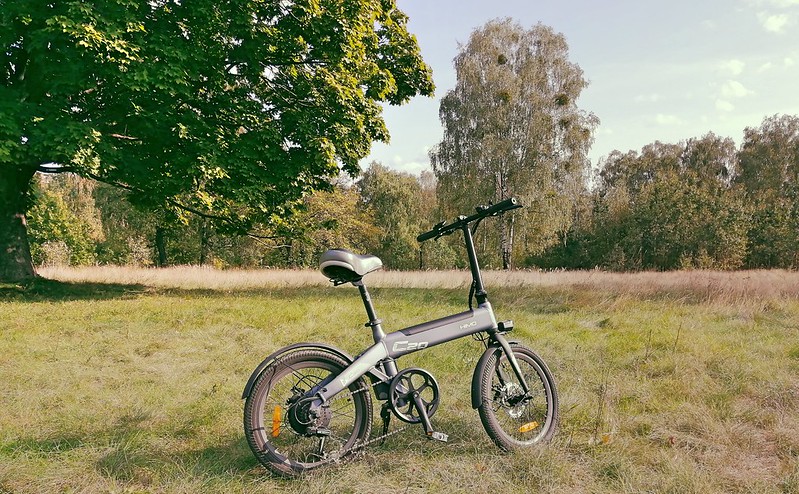
Universally the meaning that comes to most people’s minds when you say automobile is a car.  However, I would like to refer to cars and other means of personal transport that we consider buying for purposes of easing our mobility. Hence the use of the word ‘automobile’ as for some people, it is outrightly a car while for others it could be a motorbike, scooter, e-bike, regular bicycle, tricycle, or tuk-tuk. It just really depends on who/where you are, what is preferred, your budget, the beliefs you conform to (sustainability, technology, and the likes). In short, we cannot assume that everyone wishes to own a regular car, or a signature model for that matter.

It is known that many young people often end up buying cars on loans and as such, there can be an air of negativity when you tell your peers that you would like to buy a car. Why buy a car when you have not invested in any asset yet? Why a car when you could use that money for something else more useful? Why take a LOAN to buy a car? These are some of the questions often asked. I once had a conversation with former colleagues where the younger ones sought advice from the older ones about what they would do differently if we had a chance to travel back in time and do things over again. One colleague said he would not buy a car on loan. His advice was ‘make money and use it to buy what you need, avoid loans especially for cars’. Another had a differing opinion on the same subject. He had no regrets whatsoever over taking a loan a decade earlier to buy his first car when he started out his career. As you can see, advice comes in different ways, we have to make our own decisions thereafter. Not to say that I was considering buying a car at the time or now….it was simply advice worth noting for the future.

Is it a good or bad idea to buy an automobile? I think the answer depends on many factors which you must consider before deciding to spend your hard-earned money or take up a loan to buy it and repay with interest, which can be more annoying.  I am no expert at investments or financial coaching and as such, will not try to assess the situation from that angle. I will simply use my day-to-day life experience to share my insights. For starters, it is important to determine why you need the car, or whichever automobile you wish to buy. Is it a need or a want? For example, if you are considering investing in an app hailing cab as your source of livelihood, then it goes beyond common sense that this may be a necessity for you, especially if you have no other income. The same option might not be a necessity nor a priority for somebody else. So yes, a loan for that car or automobile may be well worth it because it is an investment expected to have a return. To somebody else, however, the same automobile could be a luxury for which a loan facility should not be considered as a source of funding.

For people with families constituting several incredibly young children or the very elderly, if your finances allow, I see it as rather necessary to own an automobile. The struggle to move around on public transport with these age groups can be real. Many are the times that one will opt to use taxis or car hires if the pocket allows but can be quite expensive in the long run. These options were created for occasional use. Try using a taxi for long haul trips daily and see how fast you turn into a church mouse. 

I wonder how organizations subscribed to corporate taxi services for regular long-haul trips, rather than company-owned vehicles, deal with these expenses. I always believe that it could be cheaper to invest in a company vehicle (s), meet the requisite daily operation and maintenance costs, and still have a fat balance off your cheque book at the end of the accounting period. But this is probably me thinking like a lay man with no background in transport and logistics. My thought should not be misinterpreted as a proposal to kill taxi or other corporate transport services – we need them. The economy is too tough and gets worse by the day, we cannot afford to ruin our little ray of hope that is the source of livelihood and income generated off the provision of comfortable public transport at a relatively spiked price.

If your nature of business or work requires you to travel regularly or at varied hours of the day and night, a car might be a necessity. In this case I would say no need to think twice if your cash or savings allow. It is recommended that we go green as we invest in automobiles should our cheque book allows. It is quite saddening that the ratio of electric vehicles to internal combustion engine (ICE)  vehicles in Kenya is around 1: 100,000. More clearly, there are approximately 350 electric vehicles on Kenyan roads against a total of 3.5 million ICEs, if the national transport statistics are anything to go by. Hence, we are doing badly in as far as the fight against climate change in the transport sector is concerned. The daily traffic snarl-ups witnessed in major towns paints it all. Which is why conservationists have been out to promote more climate neutral means of mobility. Unfortunately, we are faced with a not so pleasant public transport system. This is subject for discussion another day. Today our focus remains whether to buy that automobile on your needs list, for various reasons known to you – some valid, others debatable. 

Credit: Flickr
Sustainability and climate matters aside, because reality is that there are thousands of people – young and old – who buy cars every day. We must therefore deal with this reality first. It starts by making sure to do the math right, or the cost-benefit analysis as other people prefer to call it, before you invest in the automobile. If the benefits outweigh the costs, I say go for it without a wink of guilt. Provided you are not robbing anyone or borrowing from Peter to pay Paul, unless you have a clear repayment plan for how you will settle Peter’s dues. Again, the choice to go cash or loan route is pegged on ‘asset vs liability’ perception with respect to why you need/want the auto.

If buying an ICE vehicle, which is often what most of us can afford in this part of the world and economy, for the love of nature, buy something as near e-co friendly as your pocket can allow. And it should not end at the purchase desk, keep it roadworthy while hitting the roads with it. 

Have yourself a great month as you enjoy wheeling, dreaming, or planning for your first or next automobile. My bicycle is a couple of bucks away! Or so I hope. Although I don’t know how to cycle – we learn everyday. In the meantime, I will keep labouring like the laborer I am. We marked labor day hours ago anyway, so I am happy with my laborer role for now.


May 2, 2021 1 comment
0 FacebookTwitterPinterestEmail
  • 1
  • 2
  • 3

Recent Posts

  • Reflections from World Cup 2026
  • World Environment Day 2026
  • Career Circles – 2
  • Career Circles – 1
  • Nuggets of Wisdom 3

Recent Comments

  • wakinyi on Why do I do it?
  • Andrew Adwera Ochieng on Why do I do it?
  • Finance on Lessons from Northern Kenya
  • ABCs of Money – 3 – Wilkista Akinyi on ABC of Money – 2
  • Norah Magero on The Gender Equity Debate

Newsletter

Subscribe my Newsletter for new blog posts, tips & new photos. Let's stay updated!

Categories

  • Careers (12)
  • Culture (7)
  • Energy & Sustainability (14)
  • family (3)
  • financial literacy (5)
  • friendships (8)
  • goals (4)
  • inspiration (55)
  • investments (10)
  • Leadership (5)
  • memories (12)
  • positivity (34)
  • social media (3)
  • tributes (6)
  • Uncategorized (7)

About me

banner
Welcome to Opportunities and Challenges: A haven ‘’For all those things that shape my life, I feel obliged to share them with somebody”. Because each of us faces opportunities or challenges every day, and sharing is caring.

Popular Posts

  • 1

    1st shot of the vaccine and what a day!

    September 19, 2021
  • 2

    The Cool Green Campaign Initiative

    August 6, 2022
  • 3

    World Environment Day 2021: Ecosystem Restoration

    June 5, 2021

Newsletter

Subscribe my Newsletter for new blog posts, tips & new photos. Let's stay updated!

  • Facebook
  • Twitter
  • Instagram
  • Linkedin

@2020 - All Right Reserved. Designed and Developed by Pentest


Back To Top
Wilkista Akinyi
  • Home
  • About me
  • Inspiration
  • Careers
  • Energy & Sustainability
  • investments
  • Contact Me