
This post has been inspired by a colleague – who suggested I should write something about a recent experience. You know yourself! Thanks for the inspiration.

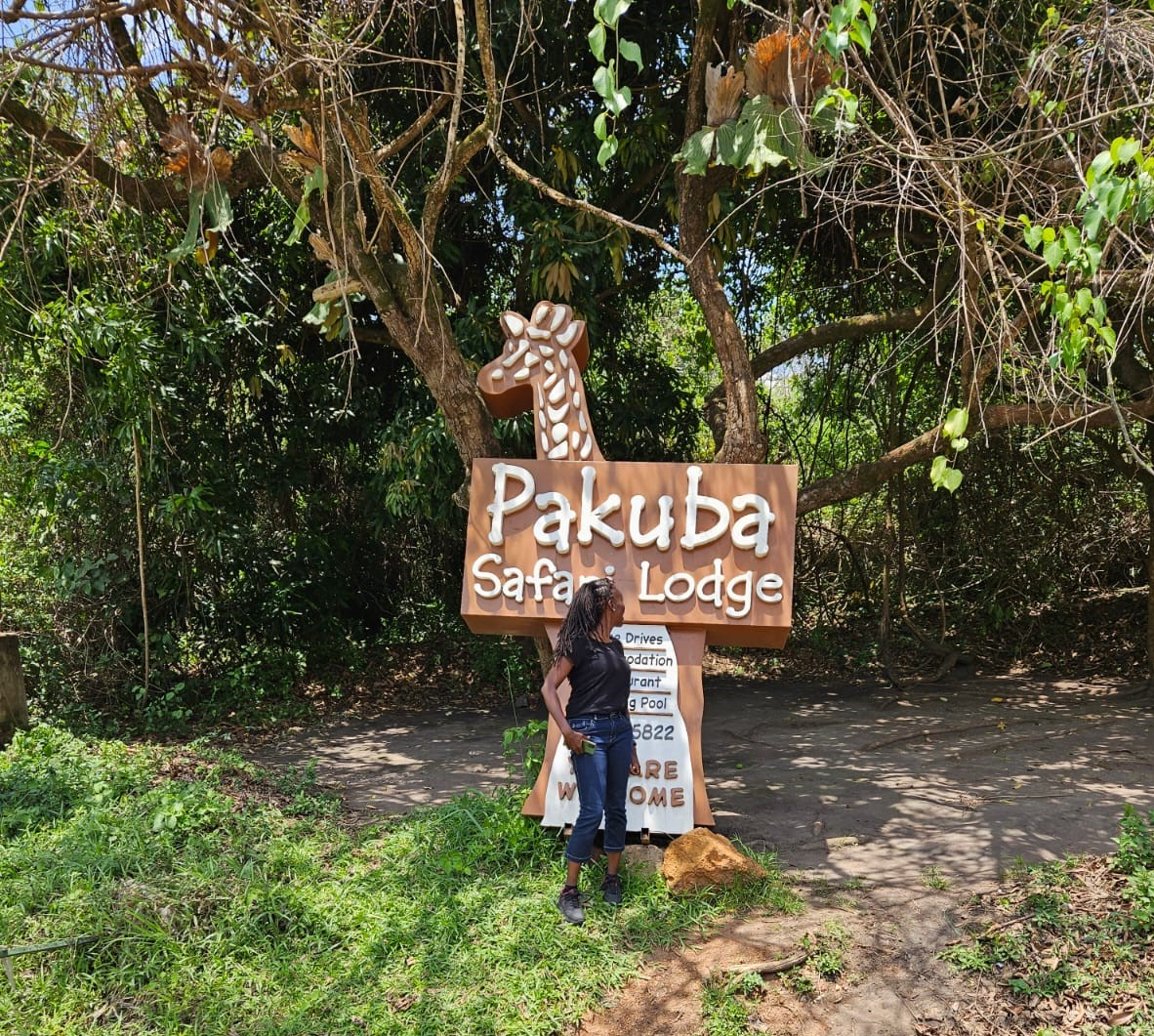
Earlier this month, I travelled across the border. In my earlier adulting life —I have done a few bus travels from Nairobi to Kampala. However, most of this occurred at night so I barely grasped the beauty that is the better part of this ‘Pearl of Africa’ nation. I think our neighbours are lucky that a bigger chunk of their land is what you would consider fertile, if the scenery between Kampala and Northwestern city of Arua is anything to go by – this is where my recent trip took me – a nearly 9-hour road travel. It was conspicuous to note how ‘popular’ the jackfruit plant dots the terrain, when you barely get a glimpse of that in my home country. Or maybe I haven’t traversed Kenya enough to find out, at least not the visible presence along a highway. I also caught an amazing view of the Nile River, which is the longest river in Africa at 6,600km. The view was just a few kilometres after our drive through the serene Murchinson falls national park. The park boasts of thousands of wildlife species. But what caught my attention is the extensive cover of the borassus palm trees. I am still curious to find out if it is exploited for commercial reasons considering the vegetation is naturally occurring in a park.
Here are a few things I learnt during the Ugandan excursion that might be worth a read:
- Woodlot establishment culture. Prior to the trip, I had heard about woodlots but didn’t exactly know what it means. If you were clueless like me, it is basically the growing of trees and I dare say sustainable foresting for purposes of meeting everyday wood and charcoal needs. It is common knowledge that biomass is the primary source of energy in sub–Saharan African countries. Even as we talk about measures of afforestation, improved cookstove technologies and alternative cooking fuels to address energy needs and climate change wrath, we still have a long way to go. Hence, I think initiatives that strive to establish woodlots was a big take home, especially the teak tree species which is a rather drought resistant hardwood tree that does quite well in Northern Uganda. I have barely seen it in Kenya and thought it could be an interesting species to test in our dry regions.
- Volcanic rock stoves are a thing! In one of my discussions with a colleague, he mentioned something he had recently learnt – imagine using rocks as a source of heating fuel. That’s right! Although this is yet to gain momentum, largely due to the cost limitation. It is an alternative energy solution already in use in Uganda. I was curious to understand the lifespan of the rocks and was advised that they can be used for about 2 years before replacement. Imagine buying that and forgetting about refills or restock for another 2 years – as is typical of LPG and biofuels like charcoal and wood often used in our homes. How cool is that! I never got the chance to see for myself how the stove works, but it was an incredible lesson to reflect on. I hope to catch the stove in use someday. Or who knows, graduate to become a user.
- Innovation hubs at the heart of the community are the way to go in fostering user-centric solutions to prevalent challenges. We had the opportunity to visit the MIT-Kulika D-lab at the Rhino camp settlement in Arua. Although I did not get the opportunity to fully immerse in the centre’s innovations, my glance at the available tools and equipment, and projects under incubation or completed by the group of youths was enough to tell it all.
- Open door policy – does it work? An open-door policy is a leadership model that encourages accessibility. Uganda is one of the few countries that apply an open-door policy for inclusion of refugees and asylum seekers. But how easy is it in practise? For example, when it comes to matters national security, no country wants to keep her borders porous. An open-door policy can easily be faulted as a high security risk. So how exactly do our neighbours make it work? In my exchanges with various Ugandan policy makers and enforcement agencies, I learnt that it is indeed possible to apply it. However, this also comes with points of overlap and challenges in practise, particularly in administrative functions, resource access and statutory provisions. But like any progressive policy instrument, there are always challenges that must be grappled with.

- A story of resilience and hope for a better tomorrow. As is often said, everybody has a story to tell. And nobody can tell your story better than you. While it is hard to tell an emotionally difficult story, it is equally as hard sitting through such a story without break apart. I was particularly touched by the story of an enterprising carpenter who runs a small enterprise under a tree. He refers to it as ‘reju reju‘ which in English translates to resilience. Now a gradually aging man, he uses his skills to educate the next generation of carpenters and youths, with hope that he will one day set up a big training facility to offer a fully-fledged vocational training centre to his community. With the few resources available for him amidst the harsh challenges he faces on a daily basis, he defies odds to make ends meet. Due to the strenuous nature of transporting raw materials from the main trading centres, he is gradually developing a shoulder and back-ache – but that does not stop him from soldiering on. He is optimistic that one day the road accessibility will offer a better transport network – so that he doesn’t have to strain by using his small motorcycle to transport bulky materials. Over the years, I have found myself internally battling with questions such as, why does God allow some people to go through relatively more difficult seasons than others? Why can’t we all have the same rights, resources, tranquillity, health, wellbeing, you name it. Are we doing enough to make the world a better place for all of us? Will we ever solve the global stresses? Are we even on the right trajectory to solve it all?
I am always grateful to get opportunities to interact with people who are facing odds and thriving in extremely difficult environments. They inspire hope – a hope of a better tomorrow – one where everyone has the means and tools to elevate themselves. Whether we will ever reach that kind of a society is a question that only time can answer. As we enjoy the Easter holiday – for those of us who mark it, let us remember to extend a ray of hope to those seeking refuge around us. It is the least we can do, considering that the greatest sacrifice was offered for our sake many centuries ago.
Until the next post, happy Easter holidays!
